



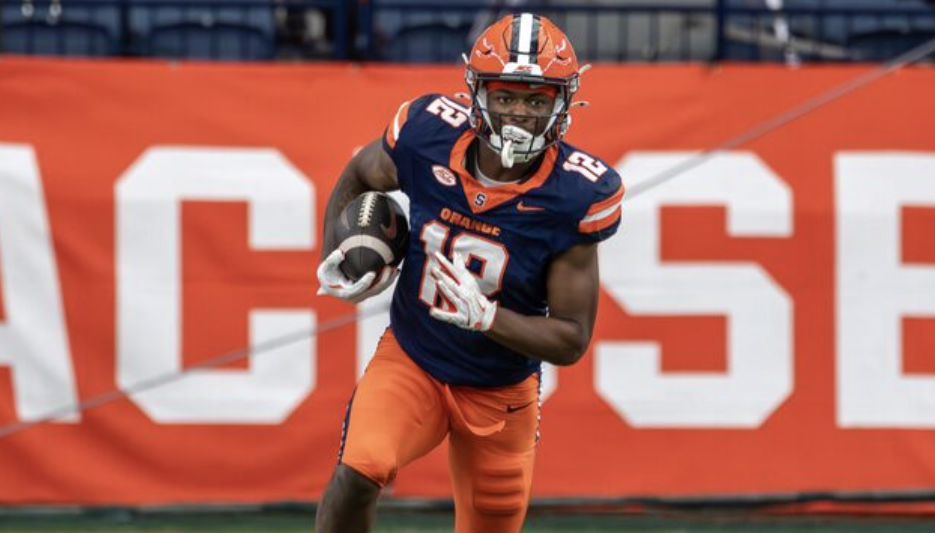
If you’re confused about Justus Ross-Simmons’s eligibility, you’re not alone. Fran Brown says he’ll play vs. Cal on Saturday. Trying to sort through legal doctrines and being whiplashed between player eligibility every week is now the fate of college sports fans. Here’s what actually happened, step by step.
Brown addressed the timing directly at Monday’s press conference, when asked why Ross-Simmons sat out the opener despite being cleared. “Just came back. They just said he was allowed to play and we’ve been practicing all that time,” Brown said. “That wouldn’t be healthy for him to just let him go in and play right away, right? And then all the other guys that been here playing.” He made clear the wait was almost over. “His opportunity, it’s going to come this week. I’m excited about the opportunity we’ll have playing against them this week, playing with them this week.”
Back in late July, a Colorado federal judge, Charlotte Sweeney, issued a broad, class-wide injunction in a case called Wisne v. NCAA. It gave every athlete from the high school Class of 2022, including Ross-Simmons and Syracuse basketball transfer Amarri Monroe, a fifth season of eligibility, overriding the NCAA’s new rule that would have blocked it. That’s the ruling that let both players plan on suiting up for Syracuse this year.
Then the NCAA fought back, and won, at least temporarily. On August 21, the Tenth Circuit Court of Appeals granted the NCAA’s request to pause that injunction while the appeal plays out. That single ruling knocked out eligibility protection for every Class of 2022 athlete relying on it nationwide, Ross-Simmons and Monroe included. That’s the moment they both became “ineligible for now,” which is exactly the phrase that made headlines at the time.
Here’s the part that actually explains Brown’s comment this week: legal experts immediately said this wasn’t necessarily the end of the road. The Tenth Circuit’s decision only paused one specific federal case. It had no power over separate lawsuits filed in state courts. So athletes who wanted certainty were advised to file their own individual case at the state level, essentially building a personal legal safety net instead of relying on the national one that just got pulled out from under them.
Ross-Simmons did exactly that. He joined a Texas state court case, and on August 27, a Dallas judge issued his own temporary restraining order specifically blocking the NCAA from enforcing its eligibility rules against him. That TRO is a completely separate piece of legal protection from the Colorado case, which is why it survived even after the Tenth Circuit ruling. It’s also exactly why Fran Brown could say this week, with real confidence, that Ross-Simmons will play Saturday.
Monroe’s situation is similar in shape but not identical in outcome, at least not yet. He filed his own lawsuit in New York State Supreme Court in Onondaga County, seeking the same kind of individual protection Ross-Simmons secured in Texas. As of the most recent reporting, his legal team hadn’t received a ruling on that request, and wasn’t commenting publicly until after the case’s first court appearance. Basketball doesn’t tip off until November, so there’s simply less time pressure on Monroe’s situation than there was on Ross-Simmons heading into a September 5 opener.
The short version: both players got knocked out by the same ruling on the same day. Ross-Simmons found his own separate legal path back in and got there first. Monroe is running the exact same play, just still waiting on the result.


